
The Agency curriculum equips students with the knowledge, character, and confidence to make wise choices, live with purpose, and contribute to their communities. Developed by Ian V. Rowe in partnership with the Johns Hopkins Institute for Education Policy, it empowers students to cultivate agency—the force of free will guided by moral discernment—and take an active role in shaping their futures.
“Agency is the force of one’s free will guided by moral discernment.”
Every child in America deserves to know that a path to a successful life exists and that they have the power to follow it. In order to point our kids to this path, we need to expose two very harmful – and very false – narratives:
Children are powerless against societal forces that are inherently biased against them. Only systemic change can open children’s path to prosperity.
Children are seen as responsible for any undesirable outcome in life, regardless of the amount of support or guidance they received.
Agency offers a new narrative that keeps individuals accountable to their choices and implores them to rely on the foundations of family, faith communities, educational institution, and entrepreneurial cultures to lead lives of flourishing.

Agency is a 30-lesson curriculum designed for ninth-grade students but adaptable for learners across what Ian V. Rowe calls “the deciding decade” (ages 14–24). Through engaging discussions, real-world examples, and opportunities for reflection, students build the habits, values, and decision-making skills needed to exercise agency in their own lives.
Organized into seven flexible, self-contained units, the curriculum can be implemented as a full-year program or integrated into existing courses. Each lesson is designed for a 50-minute class period, allowing educators to adapt pacing and implementation to meet the needs of their students and school communities.
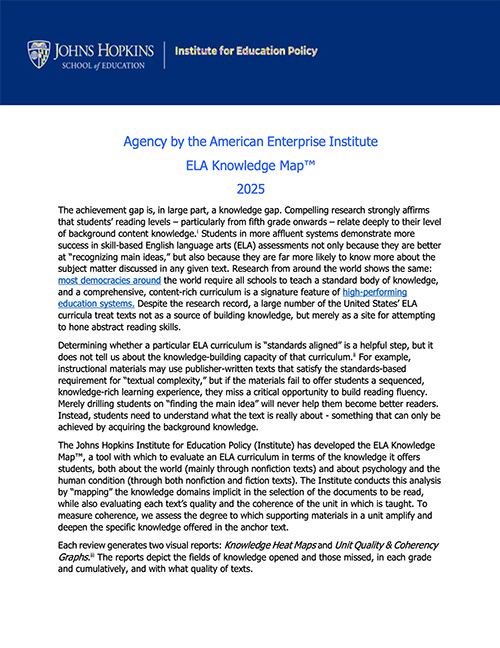
A visual overview of the curriculum framework, outlining key concepts, themes, and how each component connects to build student agency.
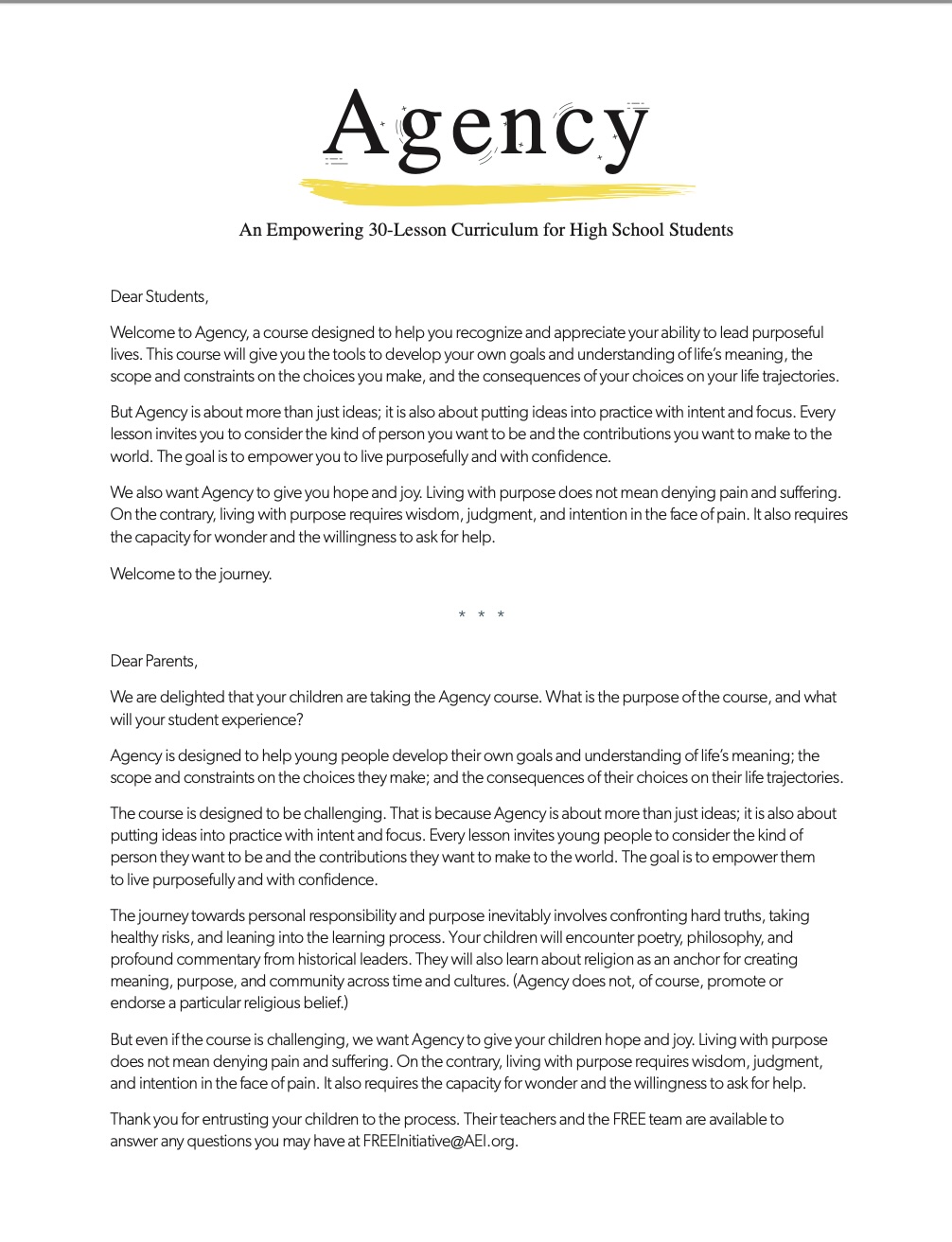
An introduction to the purpose and vision behind the curriculum, helping families understand its goals and how it supports student growth.
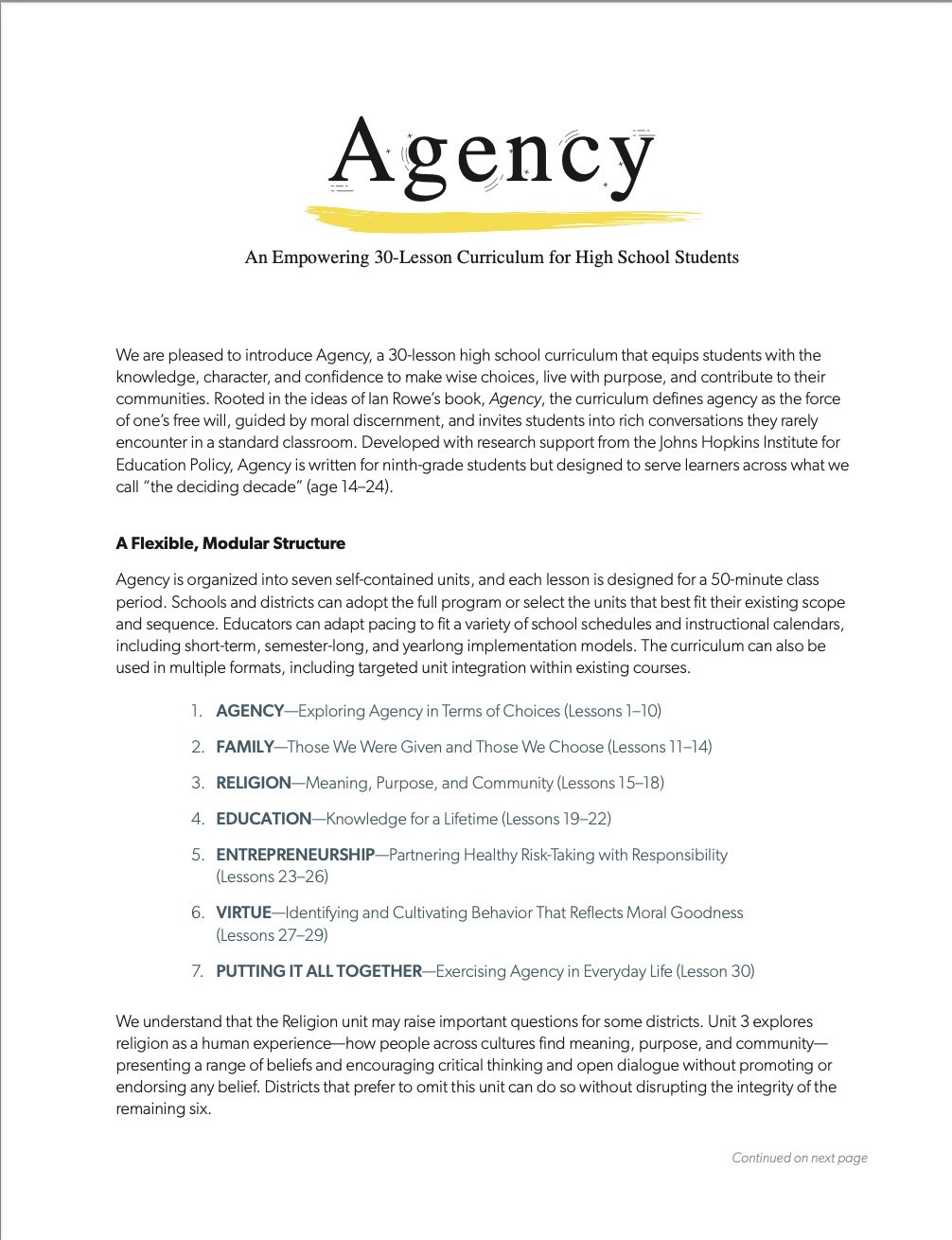
A shareable overview of the curriculum designed for school and district leaders considering implementation.